When the Airwaves Go Quiet: Keeping UK Events Orderly Without Live Comms

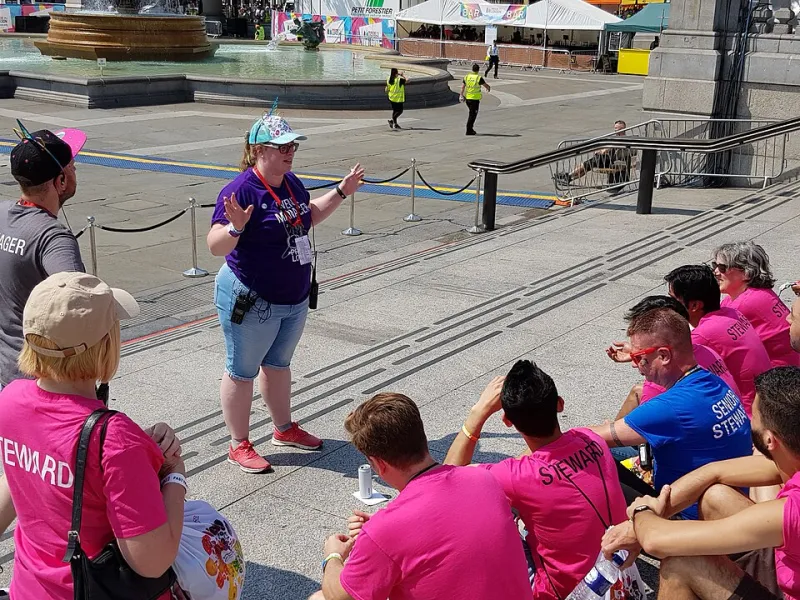
Photo: event marshal radio communication backup paper protocol UK outdoor event, via get.pxhere.com
The assumption that quietly underpins most event plans
Most UK event operations plans contain an unspoken assumption: that the supervisor can reach the marshal, the marshal can reach the control room, and the control room can reach the emergency services. That assumption is usually sound. It is also fragile. Mobile networks congest when thousands of people gather in one place. Radio channels suffer from dead spots behind stadium stands, in basements, in marquees and across rural showgrounds. Batteries fail, handsets are dropped, and channels become overloaded with routine traffic just when an urgent message needs to get through.
The operational question is not whether communications will fail. It is whether the team can still keep order when they do. A plan that depends on a live connection is a plan with a single point of failure. A plan that survives is one that every marshal, steward and supervisor can still follow with no phone in their hand.
Why the signal fails
The causes are predictable. Rural shows and country fairs often sit in not-spots where coverage is weak even on a quiet day. Stadium events create localised demand that overwhelms nearby cells during ingress and egress. Dense town-centre events — high streets, market squares, pedestrianised zones — combine physical obstruction with heavy network use. Temporary structures, basements and back-of-house areas can block radio signals. Add rain, cold and long shifts, and hand-set batteries deteriorate faster than the plan assumes.
None of this is an argument against radios or mobile phones. It is an argument for treating them as one layer among several, and for designing the fallback layer before the day rather than improvising it at the barrier.
Design for the worst connection
The first principle is simple: the fallback must be simpler than the primary system, not more complex. If the radio plan requires a channel change, a code and a supervisor decision, the fallback cannot require more. It should require less. A runner with a written slip, a marshal with a flag and a pre-agreed hold point are all viable because they are visible, local and difficult to misunderstand.
The second principle is redundancy by role, not by device. Every post should know who their nearest colleague is, who their area supervisor is and which hold point they report to if communications fail. That information belongs on the same laminated card as the site map, not in a briefing that half the team will have forgotten by mid-afternoon.
Runner protocols
Runners are the oldest fallback and still among the most reliable. A runner protocol should specify routes, pairings, timings and written messages. Runners should not be sent alone across crowded areas or along vehicle routes. Use pairs where the site allows, and give each runner a small pad of pre-printed slips with fields for time, location, situation and requirement. A verbal message passed through three people is no longer the original message; a written slip survives the journey.
Set check-in intervals. If a runner does not arrive at the control point within the agreed window, the supervisor should assume a problem rather than assume a delay. At rural shows, mark runner routes on the site map and avoid routes that cross live vehicle movements. At town-centre events, agree which side of the crowd barrier the runner uses and where they can safely cross.
Visual signals
Visual signals work best when they are few, distinct and rehearsed. A raised flag, a raised arm, a high-visibility board with a colour or number, or a simple hand signal can convey hold, go, need assistance or route closed. The signal must be visible at the distance that matters — across a crowd, along a barrier line, from a gate to a supervisor — and it must be unambiguous to everyone who might see it, including stewards and emergency services.
Avoid signals that depend on fine detail. A marshal waving both arms may be greeting someone, directing traffic or requesting help. A single agreed signal with a clear meaning is better than five improvised ones. Where line of sight is poor, identify intermediate signal points — a steward at a corner, a supervisor on a raised platform — so that the message can be relayed visually across the site.
Hold points and decision rights
A hold point is a pre-agreed location where a marshal can stop or slow crowd movement without waiting for a radio call. The concept is familiar on station platforms and at stadium turnstiles, and it transfers well to high streets and showgrounds. Number the hold points, mark them on the map and give marshals the authority to use them when a trigger condition is met: a crowd density threshold, a blocked route, a vehicle movement or a request from a steward.
Decision rights matter as much as the hold point itself. If a marshal must ask permission before holding a crowd, the fallback is not a fallback. Write the authority into the briefing: who can hold, who can release, and who must be informed afterwards. Record the trigger conditions so that the decision is consistent across posts.
Paper-based escalation ladders
An escalation ladder on paper is not a bureaucratic relic. It is a resilient communication tool. A laminated card can list the levels of response, the triggers for each level, the person who decides and the person who must be informed. Colour coding, numbered levels and clear timeframes help people act under pressure. The card should be small enough to carry and simple enough to read in poor light.
The ladder should also include a communications-down branch. If the radio fails, who does the marshal tell? If the phone has no signal, where is the nearest runner collection point? If neither works, what is the visual signal and which hold point is used? These questions should have written answers, not verbal ones.
Rehearsal is the difference between a plan and a hope
A fallback that has never been practised is a hypothesis. Rehearse it before the event. Run a tabletop exercise with supervisors and stewards, then a short practical drill: radios off, phones off, runners dispatched, visual signals used, hold points activated. Time the runner routes. Check that the laminated cards are readable and that the hold-point numbers match the site map. Brief the drill as a normal part of the day, not as a test of individuals.
From a compliance perspective, the rehearsal also creates a record. It demonstrates that the organisation has considered foreseeable communications failure and has taken reasonable steps to manage it. Under UK health and safety duties, that kind of documented diligence matters. It is not a substitute for a safe operation, but it is evidence that the operation was designed with failure in mind.
The plan that survives
The test of an event communications plan is not how well it performs when the network is healthy. It is how well it performs when the network is not. The teams that keep order in those moments are rarely the ones with the most sophisticated equipment. They are the ones whose marshals know their hold point, whose runners know their route, whose supervisors know who decides, and whose paper cards still make sense when the screens go dark.
Live communications should be used, maintained and tested. But they should not be worshipped. The fallback layer — simple, local, written and rehearsed — is what turns a communications failure into an inconvenience rather than a breakdown in crowd safety.