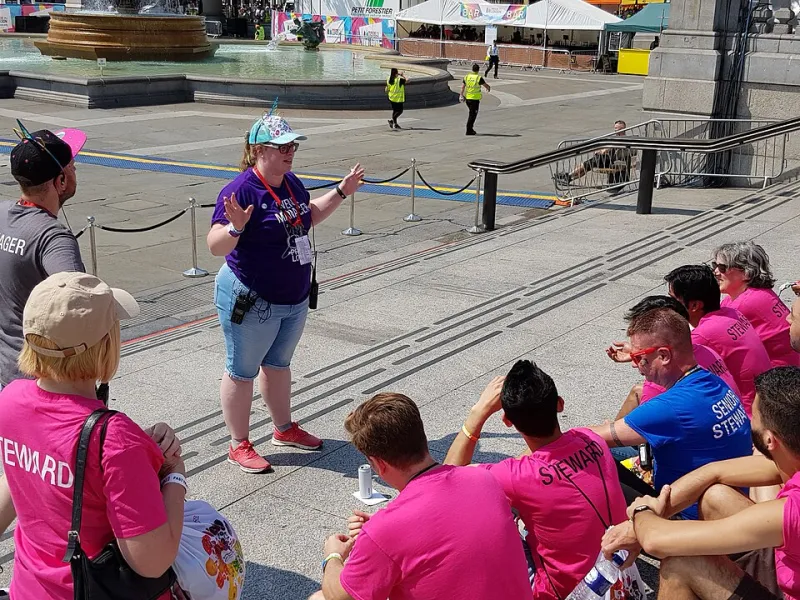
Before the Gates Open: Five Briefing Failures That Undermine UK Event Days

Photo by Photo by Jonny Gios on Unsplash on Unsplash
The briefing is a control measure, not a formality
On a UK event day, the morning briefing is often treated as a ritual: a supervisor reads from a clipboard, a few dozen marshals stand in a semicircle, and everyone disperses assuming the detail is understood. In practice, the briefing is one of the few moments when the whole operating model — roles, routes, timings, escalation and contingencies — is in one place at one time. When it is weak, the effects do not appear immediately. They appear at the pedestrian crossing that no one owns, the gate that opens ten minutes late, or the radio channel that half the team is not monitoring.
The failures below are repeated across outdoor sites, town-centre events, rural shows and stadium perimeter operations. None requires a large budget to correct. Each requires discipline from the supervisor and a willingness to treat the briefing as an operational control measure rather than a box to tick.
1. The mumble-through
The most common failure is the briefing delivered at walking pace, head down, from a clipboard. The supervisor knows the plan; the marshals do not. Key details — who holds which gate, when the crowd build-up is expected, which exit is closed — are buried in prose. Marshals at the back cannot hear, and those at the front are given no opportunity to test their understanding.
The fix: replace the read-through with a structured five-minute brief. State the day's shape first: arrival times, peak periods, egress windows. Then assign roles by name and location, not by general description. Finish with the escalation route. Ask two or three marshals to repeat back their post, their hold point and who they call if a situation escalates. If they cannot, the brief has not landed. At outdoor sites, use a portable amplifier or gather the team in a sheltered, quiet spot away from generator noise and early crowd movement.
2. The missing site map
A briefing without a site map assumes that every marshal shares the supervisor's mental picture of the site. They do not. Temporary barriers, one-way systems, closed roads and changed pedestrian routes are easy to describe and hard to visualise. The result is marshals directing people towards a route that is no longer open or failing to recognise a hold point because it was described as 'by the usual place'.
The fix: issue a laminated A5 map to every marshal and steward. Mark grid references, numbered hold points, first-aid posts, toilets, water points, exits and the location of the briefing itself. Use landmarks that will still exist on the day — a church spire, a car park entrance, a named retail unit — rather than temporary signage that may be moved. Where possible, walk the perimeter with supervisors before the briefing so that the map is reinforced by the site itself.
3. The no-question rule
Some briefing cultures imply that questions signal weakness or waste time. The effect is predictable: marshals who are unsure keep quiet, then improvise at the barrier. Improvisation is sometimes necessary, but it should not be the default because someone was reluctant to ask which way the accessible route runs.
The fix: build a deliberate question window into the brief. Say plainly that questions are expected and that unclear instructions are a briefing failure, not a marshal failure. Ask the newest or least experienced team members first; they are most likely to spot gaps that familiar staff have stopped noticing. Where a question cannot be answered immediately, record it, give a time for the answer and make sure the answer reaches the whole team, not just the person who asked.
4. The radio-channel scramble
Radio plans often collapse in the final ten minutes before gates open. Channels are announced verbally, hand-sets are distributed without labels, and marshals discover that the channel they were told to use is the one being used by traffic. In dense town-centre events and large stadium perimeters, the result is a team that appears connected but is operationally fragmented.
The fix: treat the channel plan as a written instruction. Print it on the back of the site map or on a pocket card: primary channel, secondary channel, who monitors each, and the phrase to use when making an urgent call. Run a test call before gates open and confirm that every hand-set is on the correct channel and has working batteries. Agree a radio discipline rule: short messages, location first, then situation, then requirement. Where radios are shared, name the hand-set and the person responsible for it.
5. Briefing the marshals but not the stewards
Marshals and stewards often work the same crowd but receive separate briefings, sometimes in different locations and sometimes with different versions of the plan. The gap becomes visible when a steward sends a group towards a marshal who has been told to hold that route, or when an escalation reaches a supervisor who was not part of the joint briefing.
The fix: wherever the operating model allows, brief marshals and stewards together, or at least align the two briefings from the same written operational note. Introduce supervisors and stewards to each other by role and location. Share the same escalation ladder and the same hold-point numbering. If separate briefings are unavoidable, nominate a liaison who attends both and reconciles any differences before gates open.
Supervisor's pre-gates checklist
- Briefing time and location confirmed, with shelter and amplification if needed.
- Site map issued to every marshal and steward, with hold points and facilities marked.
- Roles assigned by name, post and timing, not by general description.
- Escalation route stated and repeated back by at least two team members.
- Radio channel plan issued in writing; test call completed.
- Question window opened and recorded; unresolved points given an answer time.
- Marshals and stewards briefed from the same operational note, or reconciled by a liaison.
- Accessible routes, first-aid posts and welfare points confirmed.
- Weather and ground conditions considered for outdoor posts.
- Supervisor visible, contactable and free from other duties during the briefing.
The clipboard is not a plan. The plan is what the team can still follow when the supervisor is thirty metres away and the crowd is moving. A disciplined briefing is the shortest route between the two.