What to Ask Before You Sign: Sourcing Marshal Teams for UK Events in 2026
Most event-day difficulties are not caused by the weather. They are caused by decisions taken during procurement, when a spreadsheet of day rates is compared without much thought to what sits behind each figure. A supplier who quotes twenty per cent less per head is rarely offering the same thing. The purpose of this checklist is to make those differences visible before a contract is signed.
1. Start with a task breakdown, not a headcount
Ask each supplier to price against a written list of tasks: car park entry, pedestrian flow, accessibility routes, vehicle gates, welfare points and egress. A per-marshal rate means little until both parties agree what those marshals are actually doing. Suppliers who engage seriously with the task list at tender stage are usually the ones who brief properly on the day.
2. Interrogate the ratios
There is no universal ratio, and any supplier who offers one without asking about site layout, audience profile and vehicle movement is guessing. Ask how the proposed number was derived, what the supervisor-to-marshal span of control will be, and how the plan changes if attendance runs above forecast. A team with too few supervisors is a team that cannot escalate.
3. Confirm paid briefing time
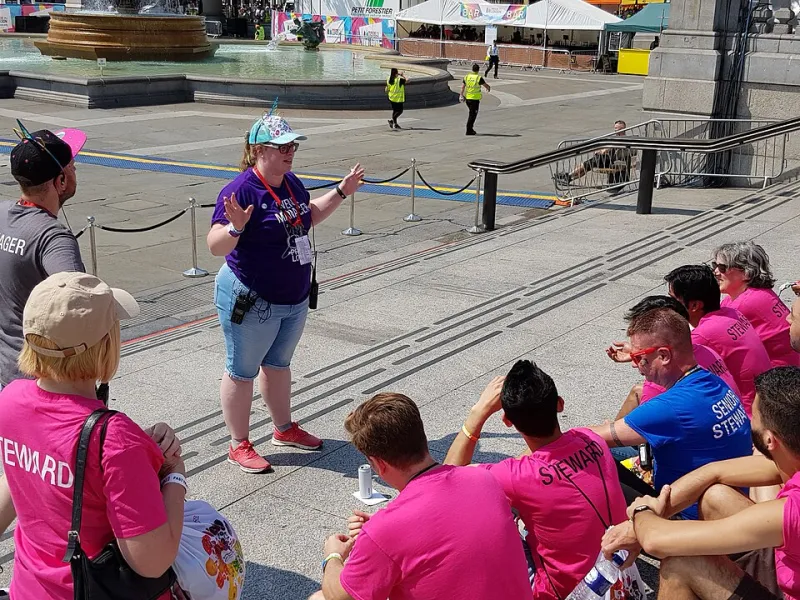
Briefing is where reliability is built or lost. Establish whether briefing hours are included in the quoted rate, how long they are, whether the whole team attends or only supervisors, and whether a site walk-through happens on the day or in advance. A supplier who treats briefing as unpaid overhead will compress it.
4. Check insurance and liability in detail
Request current certificates for public liability and employer's liability, and confirm the limits are adequate for the event's scale. Ask who carries responsibility for a marshal's actions, whether subcontractors are used and, if so, whether they are covered under the same policies. Vague assurances are not documentation.
5. Ask how staff are vetted and accredited
For roles involving children, vulnerable visitors, vehicle gates or restricted areas, the vetting standard should be stated in writing. Ask about right-to-work checks, reference or screening processes, and how identification and accreditation are issued and collected. A supplier who cannot describe their process in a few clear sentences probably does not have one.
6. Map the escalation route
Every event produces moments that exceed a marshal's authority: a refusal to follow a direction, a suspected crime, a medical emergency, a lost child. Ask who the team escalates to, how quickly, and through what channel. Confirm that the supplier's on-site supervisor has the seniority to make decisions without a phone call to an office, and that radio or communications equipment is included rather than assumed.
7. Value local knowledge
A team that has worked the site before will know where the ground holds water, which gate attracts queueing and which route the stewards use. Ask what local experience the supplier can demonstrate, whether the same supervisors will return, and how they hand over knowledge between years. Continuity is a genuine operational asset, and it is worth paying for.
8. Draw the line between marshalling and security
This is the question most often left unanswered, and it causes the most trouble. Marshals direct, inform and assist; they do not search, restrain, detain or use force. Ask the supplier to confirm in writing that their staff are trained and insured for marshalling duties only, and that any request for security functions will be referred back to the event organiser. If a quote appears to include physical intervention at a marshal rate, treat it as a warning rather than a bargain.
9. Review welfare and working conditions
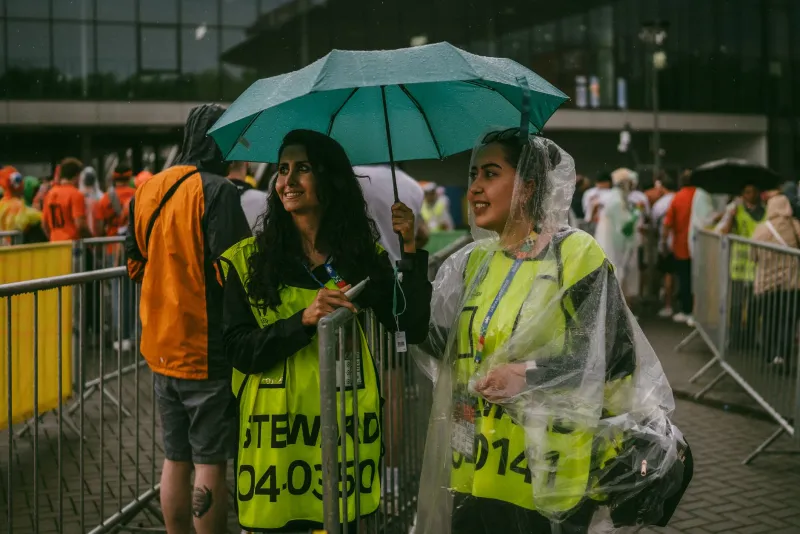
Long shifts on open ground are demanding. Ask about maximum shift length, rest breaks, access to shelter, drinking water and welfare facilities, and how the supplier handles a marshal who becomes unwell. Teams that are properly looked after tend to be the ones still paying attention at the end of the day, which is when most egress incidents occur.
10. Agree cancellation terms and standby arrangements
Weather, postponement and changes of attendance are normal in the UK events calendar. Establish notice periods, cancellation charges, and whether a standby capacity can be held for high-risk days. Ask what happens if a named supervisor is unavailable and how replacements are inducted.
11. Read the contract for what it does not say
Finally, compare documents side by side. Look for missing detail on briefing, supervision, insurance and escalation. The gaps tell you more than the marketing material. A reliable supplier will welcome these questions, answer them in writing and build the answers into the operational plan. The cheapest quote is rarely the calmest event, and the difference is almost always settled at this stage rather than on the day.