The Quiet Hours: Marshal Discipline During UK Event Build-Up and Break-Down
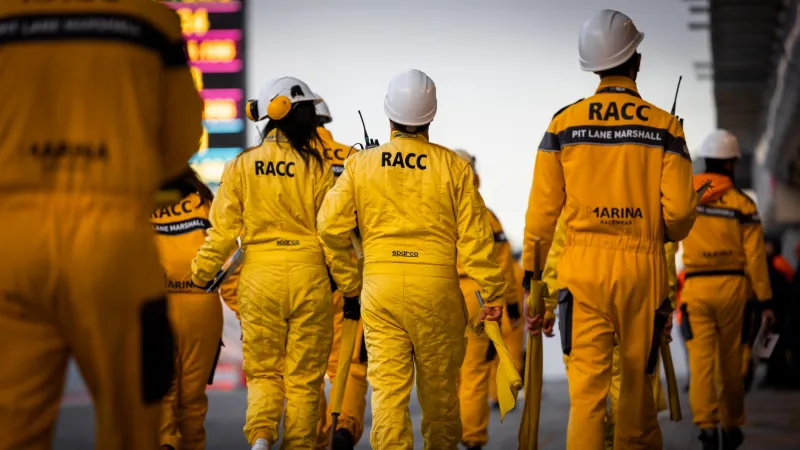
The public experience of an event is neatly bounded: gates open, crowds arrive, performances unfold, visitors leave. For the ground team, that boundary is misleading. Much of the serious risk on a UK event site is present before the first visitor appears and after the last one has gone. Build-up and break-down are not quiet backstage periods. They are logistics operations with moving plant, temporary structures, deliveries, contractors and changing site conditions. In those hours, marshals are not decorative. They are part of the control system.
The site before it becomes a show
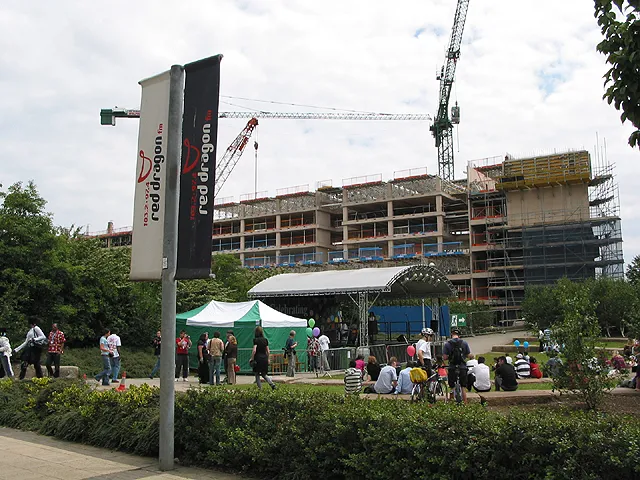
During build-up, an event site behaves more like a construction and logistics environment than a visitor attraction. Forklifts, telehandlers, delivery vehicles and articulated lorries share space with pedestrian contractors, cable-laying teams and structure crews. Routes change by the hour. Temporary fences go up, then move. Compounds fill and empty. A marshal who understands vehicle-pedestrian segregation is therefore as valuable on the Tuesday before a weekend event as on the Saturday itself.
The core principle is simple: people on foot and people on plant should not rely on eye contact to stay apart. Site-vehicle segregation needs physical definition where practicable, signed routes, speed limits, reversing controls and agreed crossing points. Marshals should be positioned at interfaces rather than scattered at random. A gate, a blind corner, a narrow access road or a busy compound entrance is a marshal post. An empty stretch of perimeter fence is usually not.
Contractor sign-in is a control, not a formality
A signing-in sheet is only useful if it changes behaviour. At the access point, marshals should be briefed to confirm that vehicles and individuals are expected, that the correct induction has been completed, and that the route into site is understood. Delivery schedules should be realistic. If three vehicles arrive for the same compound at the same time, the problem is not the marshal at the gate; it is the plan. A holding area, a timed slot or a radio call to the receiving contractor can prevent a congestion point from becoming a collision risk.
Marshals must also be clear about the limits of their role. They are not security officers, and they should not be asked to search, detain or make enforcement decisions beyond their training and authority. Their value lies in observation, clear communication, route control and escalation. A polite challenge to an unknown vehicle is appropriate. A physical confrontation is not.
Night works and the limits of visibility
In the UK, build-up and break-down often run into darkness, particularly in autumn and winter. Temporary lighting may be incomplete. Task lighting can create glare for drivers. High-visibility clothing helps, but it does not resolve blind spots or confusing layouts. Marshals should walk the routes after dark and check that signs remain legible, pedestrian paths remain obvious and reversing areas are controlled.
Radio discipline matters more in the quiet hours, not less. Short, specific messages are better than crowded channels. If a route changes, the change should be communicated to the gate, the compound and the event control point, not only to the contractor who requested it. Weather adds another layer: wind restrictions on temporary structures, rain affecting ground conditions and cold reducing concentration. A marshal team that monitors conditions during build-up can flag problems before they become show-day failures.
Fatigue and handover discipline
Build-up and break-down shifts are often long and repetitive. The work can feel less structured than public-facing marshalling because there is no crowd to anchor the day. That makes fatigue management and handover discipline essential. Rotas should include proper breaks, and supervisors should watch for the signs of tiredness that appear when people are working around plant.
Handover is where many quiet-hour risks accumulate. An outgoing marshal may know that a delivery is still outstanding, that a key has been moved, that a cable route is exposed or that a contractor has isolated an area. If that knowledge stays in one person’s head, it is lost. A written handover should record outstanding vehicle movements, changed routes, temporary hazards, incidents, permit conditions and any restrictions agreed with contractors. The incoming team should receive a short briefing and, where practicable, a walk of the critical interfaces.
Break-down brings the risk back
Break-down has its own pressures. The public has gone, contractors want to leave, and the site can feel as though the event is over. In practice, the mixture of tired crews, dismantling plant and time pressure can be more dangerous than the build. Vehicle-pedestrian segregation must remain in place until the last movement is complete. The sequence should be deliberate: public egress first, contractor access second, plant movements under controlled routes, and waste or cable removal without blocking emergency access.
Marshals should not be absorbed into dismantling work. Their role is to keep the interfaces ordered, not to become an extra pair of hands on a structure. If a route is compromised, they should be empowered to stop movement and escalate. Reliable ground teams are judged as much by what they prevent in the quiet hours as by what they manage when the crowd is present.
A brief that covers the whole operation
A build-up and break-down marshal brief should include site maps, vehicle routes, pedestrian routes, signing-in procedures, escalation contacts, welfare arrangements and the limits of the role. It should be refreshed daily, because event sites change quickly. Contractors should know who is controlling the gate and who to call when a delivery is late or a route is blocked. Event control should know which marshal posts are live and when they stand down.
Marshals Group approaches these phases as part of the same operation as show day: formal briefings, clear posts, disciplined handovers and teams that understand the difference between being helpful and being properly deployed. The carnival may be the visible part, but the quiet hours are where a well-run event is often protected.