The Approach Is the Event: Planning UK Arrival Marshals Before the Gate
Photo: Robert Lamb , CC BY-SA 2.0, via Wikimedia Commons
Most event operations plans give the main gate a prominent place. It is visible, measurable and easy to brief. Yet the first constraint of the day often forms somewhere else: a roundabout carrying more traffic than the local network was designed for, a park-and-ride site filling faster than forecast, a coach drop-off with no clear pedestrian line, or a railway station exit where thousands of attendees meet a pavement not built for them.
Arrival marshalling is therefore not a gate activity with a car-park add-on. It is a distributed operation across the approach network. In 2026, with venues under continued pressure to manage traffic, emissions and local disruption, the teams that perform best are those deployed before the main gate becomes the focus.
The gate is the last node, not the first
A queue at the gate is usually a symptom. The cause may be a junction upstream, a car-park ingress point that cannot absorb a surge, or a pedestrian route that conflicts with vehicle movements. If marshals are concentrated only at the gate, they see the result rather than the cause.
Treating arrival as a network changes the planning question. Instead of asking how many marshals are needed at the entrance, ask where the arrival journey can fail, which failure points are visible from the road, and which can be influenced by a marshal with the right briefing, position and authority. This is not about replacing traffic management professionals or the police. It is about placing trained ground teams where they can guide, reassure and escalate before a small delay becomes a standing queue.
Four arrival nodes that need marshal cover
Approach roads and junctions
On rural and suburban venues, the approach road is often the least controlled part of the journey. Marshals cannot direct traffic on the public highway unless the arrangement has been agreed with the relevant highways authority and is covered by the event traffic management plan. Within that framework, they can provide wayfinding, manage pedestrian crossing points, support signed routes and report congestion triggers to the control room. The value lies in early observation: a marshal at a key junction can see a build-up before it reaches the gate.
Car parks and park-and-ride sites
Park-and-ride is a queue-management system in disguise. Vehicle ingress, bay allocation, pedestrian segregation and bus loading all happen in one place. Small design choices matter: whether cars can turn safely, whether pedestrians have a protected walking line, whether buses can board without blocking the next arrival. Marshals should be briefed on fill levels, overflow arrangements and the point at which the site is closed to further vehicles. That information needs to flow in both directions, not just from the control room outwards.
Drop-off and coach zones
Drop-off areas are high-friction because they combine brief stops, uncertain drivers and pedestrians who may not know where to go. Coaches add dwell time and group movement. A marshal who understands the difference between a five-second drop-off and a coach unloading is more useful than a generic presence. Clear signage, a defined pedestrian route and a no-stopping boundary help, but the marshal remains the human interface when drivers ignore the first two.
Pedestrian routes from transport hubs
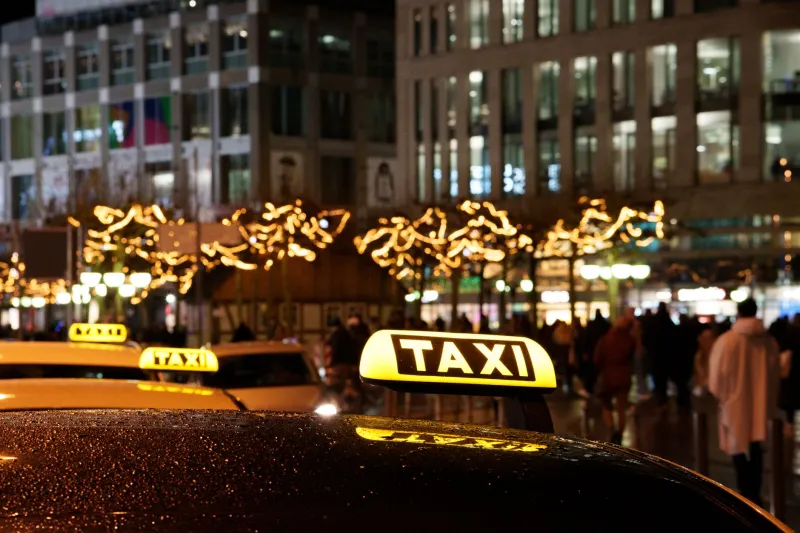
The arrival journey often includes a walk from a railway station, bus stop or taxi rank. These routes can be overlooked because they sit outside the venue boundary. In UK towns and cities, pavement width, crossings and lighting vary considerably. A short walking route can become a bottleneck if it meets a vehicle entrance or if attendees stop at the first visible sign. Marshals on these routes provide direction, keep groups moving and flag accessibility issues before they become complaints.
A 2026 checklist for arrival teams
- Map the full arrival network, including public roads, car parks, drop-off points, coach areas and pedestrian routes from transport hubs.
- Confirm which positions require agreement from the local highways authority, police or transport operator, and document the limits of marshal authority.
- Calculate arrival profiles by mode, not just by total attendance. Vehicle occupancy, coach numbers and pedestrian share change the staffing requirement.
- Agree trigger points for congestion, car-park closure, overflow activation and pedestrian route diversion.
- Brief marshals on the why as well as the where: the route logic, the priority movements and the escalation path.
- Check signage from a driver's and a pedestrian's perspective, ideally in low light and bad weather.
- Plan welfare and rotation for arrival teams, who may be standing on exposed approach roads long before the event begins.
- Build a communication fallback for areas where radio coverage is unreliable.
- Record arrival timings and queue lengths so the plan can be adjusted for future events.
Coordination is the real control
Arrival marshals do not work in isolation. They sit between the event control room, the traffic management contractor, local authority highways teams and transport operators. The quality of that coordination often determines whether a marshal can solve a problem locally or must wait for permission.
A useful practice is a short pre-event arrival walk. It brings together the people who will manage the car parks, the approach roads and the pedestrian routes, and it tests the plan against the physical environment. Maps are necessary, but they hide gradients, blind corners, temporary obstructions and the places where pedestrians naturally drift.
The first hour sets the tone
If the arrival phase is planned as a set of connected nodes, the main gate receives people who have already been guided, grouped and reassured. That reduces the chance of the gate becoming the first point of confusion and gives the event team a calmer start.
The approach is not a peripheral detail. For many attendees, it is the first meaningful contact with the event. Marshals placed early, briefed properly and supported by clear authority are not simply managing cars and pedestrians. They are shaping the opening impression of the whole day.