What Gets Written Down: Making Incident Records Routine for UK Marshal Teams
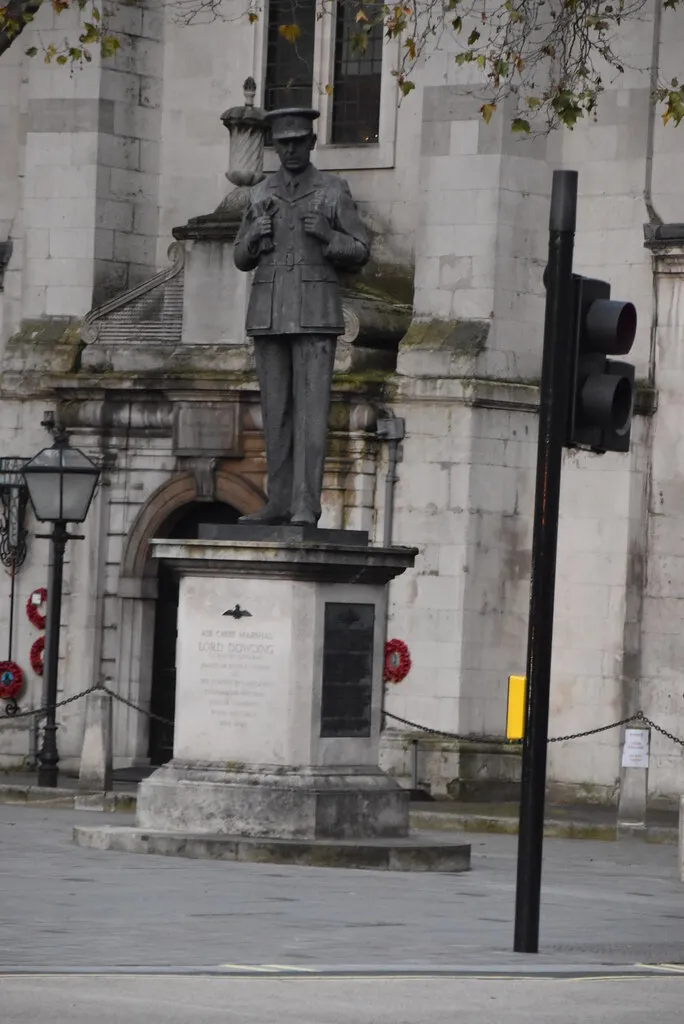
Photo: N Chadwick , CC BY-SA 2.0, via Wikimedia Commons
The record starts before the incident
A marshal team can spend months preparing for an event and still lose the value of that preparation in the minutes after something goes wrong. Not because the response was poor, but because nobody wrote down what happened while the details were still fresh. Incident recording is sometimes treated as an administrative add-on: something to be completed after the gates close, if there is time. In practice, it belongs inside the marshal brief from the outset.
For UK event organisers, the case for good recording is not abstract. A written log may be reviewed in an internal debrief, requested by an insurer, examined as part of a licensing or safety advisory process, or relied upon in legal proceedings. None of those audiences expects literary prose. They expect a clear, contemporaneous account of what was seen, what was done and what happened next. The marshal team that can provide that account is in a stronger position than one reconstructing events from memory days later.
Recording begins with the brief
If incident logging is mentioned only in passing at the end of a briefing, it will be treated as an afterthought. It should be explained at the start, alongside radio protocol, evacuation routes and welfare arrangements. Marshals should know where the log is kept, who is responsible for it, what counts as an incident worth recording and when an entry should be made.
The threshold should be sensible. A near miss, a minor trip, a lost child, a confrontation at a barrier, a damaged section of fencing, a medical referral, a change to a crowd route — these are all matters that may matter later. Teams should not wait for a serious occurrence before starting to record. A brief entry about a near miss can reveal a pattern that a debrief would otherwise miss.
A simple standard helps. Each entry should capture the time, the location, the people involved where relevant, what was observed, what action was taken and what the outcome was. If a matter was passed to a supervisor, security team, ambulance crew or event control, that referral should be noted. If a witness was present, their role should be recorded without unnecessary personal detail. The aim is not to produce a narrative for its own sake, but to leave a reliable trail.
Plain language, not performance
Marshals should be encouraged to write in plain English. Short sentences are better than long ones. Facts are better than impressions. "Barrier section B moved approximately 30cm at 19:42; crowd pressure reduced after steward opened auxiliary route" is more useful than "crowd got a bit pushy and we sorted it." The first version tells a reader what changed, when and why. The second invites guesswork.
Speculation should be left out. A log is not the place to assign blame, diagnose a medical condition, characterise a person's temperament or offer a theory about why someone behaved as they did. Marshals should record what they saw and heard, not what they inferred. If an opinion is operationally necessary — for example, that a queue appeared to be growing faster than the available route could accommodate — it should be framed as an observation and kept brief.
Humour, shorthand and internal jargon should also be avoided. An entry that makes sense to the night shift may be opaque to an insurer or solicitor reading it months later. Abbreviations should be used only where they are standard and explained. Personal data should be kept to what is necessary for the record. Medical details, addresses and contact information should not be collected simply because they are available. UK data protection principles still apply to incident logs, and retention arrangements should be clear.
Timeliness is part of accuracy
Memory is not a recording device. It drifts, fills gaps and becomes more certain with each retelling. That is why entries should be made as soon as practicable, ideally during the shift or immediately after it. Waiting until the end of a long day, or until the following week, invites reconstruction. Reconstruction is not dishonest, but it is less reliable.
A useful discipline is to log the time of the entry as well as the time of the incident. If a marshal writes at 22:15 about something that happened at 18:50, the reader can see the gap. That is more honest than presenting a later account as though it were contemporaneous. Where a delay is unavoidable, the reason should be noted briefly.
Supervisors should review entries during the event where possible. This is not about catching people out. It is about spotting gaps while they can still be filled: a missing location, an unclear outcome, an action that was taken but not recorded. A quick review at handover can turn a scattered set of notes into a coherent record.
From notebook to debrief
The value of a log is realised after the event. In a debrief, entries can be used to trace decisions, identify near misses and test whether plans worked as intended. Patterns may emerge that were invisible in the moment: repeated queue build-ups at the same gate, several minor trips on the same temporary walkway, recurring confusion at a wayfinding point.
For insurer queries, the log can demonstrate that the team had a system, followed it and acted on what it saw. For legal defensibility, it can show that records were made at the time, rather than assembled to suit a later argument. None of this requires a complex database. A numbered notebook, a standard form or a simple digital template can work, provided it is used consistently and stored securely.
The essential point is cultural. Incident recording should be presented to marshals as part of the job, not an interruption to it. A team that writes down what it saw is not adding bureaucracy to the event. It is preserving the evidence of its own professionalism.
A short standard, applied consistently
Marshals Group teams are briefed to treat recording as an operational task: timely, factual and proportionate. That means a clear place to log, a simple format to follow and a supervisor who checks that entries are being made. It means leaving out speculation and unnecessary personal detail. And it means recognising that the log is not the property of the person who writes it, but a record for the event team, the organiser and, if necessary, the authorities who may later ask what happened.
A well-kept log will not prevent an incident. It will help an organisation understand one, explain one and learn from one. In UK event operations, that is not paperwork at the edge of the job. It is part of the job.