Where the Order Meets the Tarmac: Marshal Authority at UK Road Closure Points
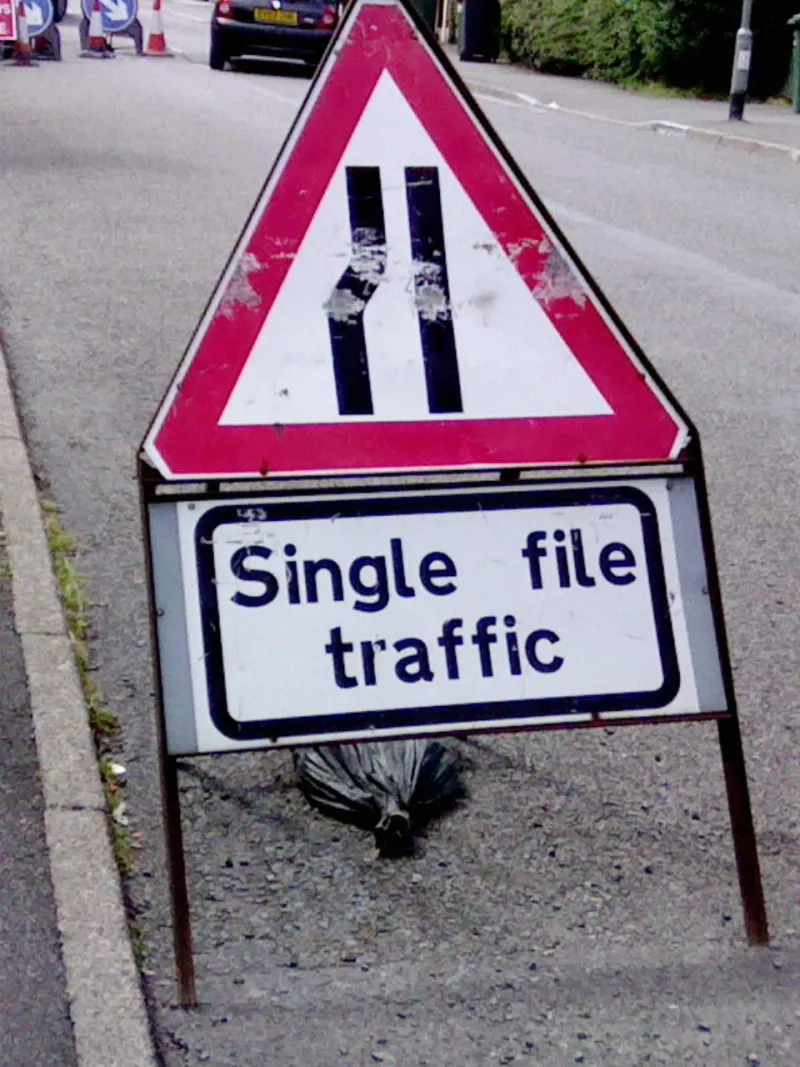
Photo: Gary , CC BY-SA 2.0, via Wikimedia Commons
A closure point is rarely experienced as a legal document. To a driver who has used the same road every morning for eleven years, it is an obstacle, an inconvenience and occasionally a personal affront. Yet behind that line of cones sits a Temporary Traffic Regulation Order — a formal instrument made by the highway authority, with a defined extent, a defined period and defined exemptions. The gap between what the order says and what the driver understands is where event marshals do most of their work.
The Instrument Behind the Cones
A Temporary Traffic Regulation Order (TTRO) is made under the Road Traffic Regulation Act 1984 and is the mechanism by which a highway authority — usually a county council, unitary authority or Transport for London borough — may prohibit or restrict traffic on a road for a specified purpose and period. For events, orders are frequently made under the special events provisions of the Act; for works or emergencies, other sections apply. Each has its own notice requirements and its own drafting conventions.
What matters on the ground is that the order is not a suggestion. It is the lawful basis for the closure, and it will specify the roads affected, the dates and times it operates, the classes of traffic restricted, and any exemptions the authority has chosen to include. Marshals who have never seen that document are being asked to enforce something they cannot describe. Before deployment, every closure point lead should be able to answer three questions without hesitation: what is the extent of the restriction, when does it bite, and who is exempt.
From Paper to Position
Translating an order into a workable closure point is a design task, not an afterthought. Three elements need to align.
Signage. Temporary signing should follow the principles set out in Chapter 8 of the Traffic Signs Manual, applied by a competent person. Advance warning signs give drivers time to choose an alternative; the closure itself needs to be unambiguous at the point of decision, not fifty metres beyond it. Signage that contradicts a marshal's hand signal is worse than no signage at all, because it invites the driver to pick whichever instruction suits them.
Positioning. A marshal stood in a live carriageway is a person at risk, not a control measure. Closure points should be sited so that the marshal works from the verge, footway or a protected area, with cones and barriers doing the physical work of the restriction. The human presence explains and reassures; the hardware enforces.
Consistency. If a vehicle is turned away at nine o'clock, it must be turned away at eleven. The single most corrosive thing that can happen at a closure point is a driver being waved through after watching someone else be refused. Establish the exemption list at briefing and apply it without improvisation.
The Limits of the Mandate
This is the point at which well-intentioned teams most often come unstuck. An event marshal is not a police constable. The powers to stop and direct traffic, and to require a driver to comply with a direction, rest with the police and with persons authorised for that purpose. Some orders and event arrangements do provide for authorised marshals to direct traffic, and accredited traffic management operatives may be deployed where the scheme requires it — but that authority is specific, documented and not assumed.
Practical consequences follow. A marshal may request, explain and facilitate. A marshal may not physically obstruct a vehicle, reach into a car, take keys, or attempt to detain anyone. Where a driver insists on proceeding, the correct response is to step clear, record the registration and the time, and notify the police or the designated event control point. A vehicle that has already forced its way past a closure is a reportable incident, not a personal defeat.
Access Is the Hardest Conversation
The exemptions attached to a TTRO are where most disputes are born. Residents within the closed extent, blue badge holders, bus services, emergency vehicles, waste collection, taxis and pre-agreed deliveries may all have a claim — but the terms vary between authorities and between orders. Do not guess. Obtain the exemption schedule in writing at the planning stage and turn it into a one-page card for each closure point.
For residents, the difference between a warm reception and a hostile one is usually information delivered early. A letter drop a week ahead, a named contact number and a clearly displayed access route do more than any amount of explaining on the day. Where access is being managed, consider issuing a simple pass or permit and briefing the closure team on how to verify it without turning the entry into a checkpoint.
When a Driver Disagrees
Confrontation at a closure point follows a predictable pattern: frustration, an appeal to fairness, a threat to proceed, and then either compliance or escalation. Marshals who have a short, consistent script handle all four stages better than those improvising.
- Open with the reason, not the rule: what is happening and for how long.
- Give the alternative route plainly, and be specific about distance and direction.
- Offer the legitimate route to redress — a contact number, a name, a promise that the point will be logged.
- Keep your voice level, your hands visible and your body angled away from the vehicle.
- Disengage the moment the situation moves from disagreement to aggression, and report it.
Formal language is not the same as stiff language. A calm, factual explanation delivered with a helpful tone de-escalates more reliably than a recitation of statutory wording.
Working Alongside Highways and the Police
Closure points do not exist in isolation. The highway authority's traffic management team, the event's own traffic management contractor, the police and, on the strategic road network, National Highways all have an interest in the same stretch of tarmac. Nominate a single liaison for each closure cluster, agree radio or telephone contact in advance, and make sure the closure team knows who to call and in what order.
Where a police officer attends, the marshal's role shifts to support: provide context, provide the order reference, provide your log. Do not attempt to arbitrate between an officer's direction and your own understanding of the order in front of the public. Resolve it afterwards, through the liaison, in writing.
Recording the Day
Every closure point should produce a simple record: the times the restriction was in force, the exemptions granted and to whom, the vehicles turned away, and any incidents of non-compliance with a registration and description. This is not bureaucracy for its own sake. It is the evidence base that allows a highway authority to judge whether the order worked, allows an event to defend a complaint, and allows the next event on the same road to be planned with less guesswork.
A closure holds because the order is sound, the signage is honest, the position is safe and the marshal knows exactly what they are and are not empowered to do. Everything else — the courtesy, the script, the record — is what keeps a legal restriction from becoming a flashpoint.