The Route That Must Not Fail: Emergency Access Discipline for UK Event Teams
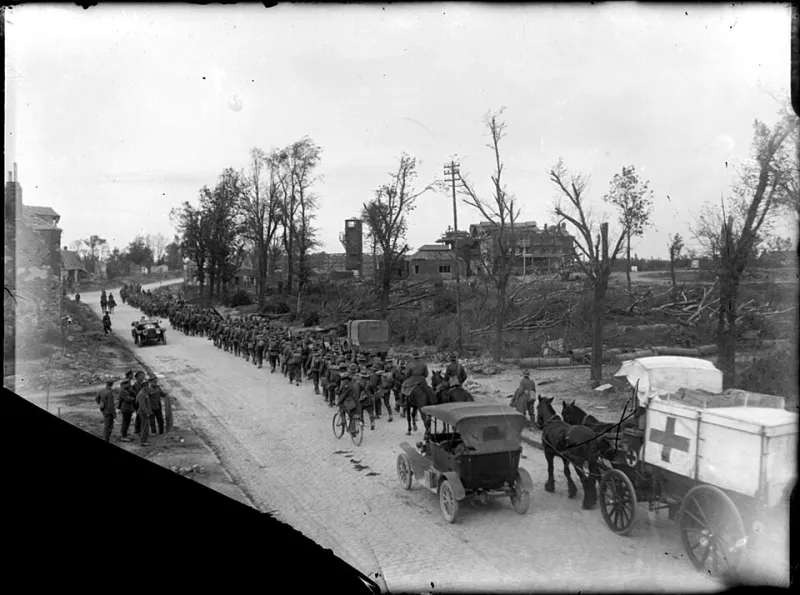
Photo: National Library NZ on The Commons, No restrictions, via Wikimedia Commons
At many UK events, emergency access begins as a coloured band on a site plan. It is agreed in meetings, drawn to scale and written into the event management plan. On the ground, it is a strip of land that must survive contact with queues, contractor vehicles, temporary fencing and people who see an empty lane and assume it is available.
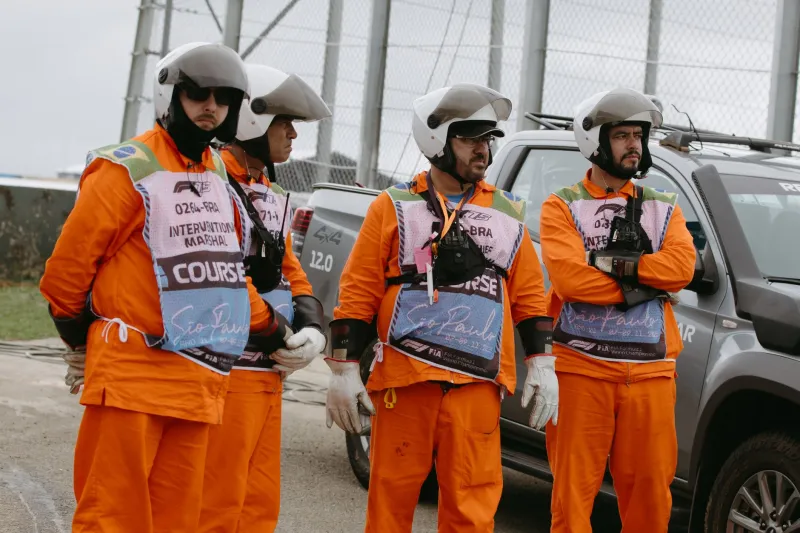
That gap between the drawing and the ground is where marshal teams earn their keep. A blue-light corridor is not a courtesy lane for staff, a spare circulation route when the crowd builds, or a convenient place to park a generator. It is a live commitment to the ambulance, fire and rescue services, and to everyone on site who may one day depend on it. Keeping that commitment real requires briefing, testing, coordination and a rehearsed response for the moment the route is blocked.
Brief the corridor as a rule, not a preference
Marshals need to understand what the route is for before they understand where it runs. A briefing should name the services that will use it, the vehicles those services are likely to send, and the places those vehicles must reach. It should be clear that an ambulance carrying a patient is not the only legitimate user: a fire appliance attending a small fire, a specialist rescue unit or an air ambulance support vehicle may all need the same ground.
The briefing should also settle the boundaries of marshal authority. Marshals can hold a lane, direct pedestrians, open a gate and move a temporary barrier. They cannot lawfully stop traffic on the public highway, and they should not be asked to do so unless the local authority or police have put the proper arrangements in place. Where a route crosses a public road, the briefing must state who controls that crossing and how the marshal contacts them.
A written route card is useful, but it should be short enough to use under pressure. One page with a map, gate references, key locations, radio channels and escalation numbers is more valuable than a long annex that nobody opens. The card should also state who can authorise barrier removal and where the keys or release mechanisms are held.
Test the route before the gates open
A route that has only been walked is not a route that has been tested. Before gates open, the access corridor should be inspected on foot and then driven at realistic speed by a vehicle of comparable size to the appliances likely to attend. An ambulance-sized vehicle will expose tight corners, soft ground, overhanging branches, badly placed signage and gates that open in the wrong direction.
The test should check width, surface, turning circles and lighting. It should confirm that trackway or ground protection is laid where vehicles will leave hard standing, that bollards and removable posts can be released quickly, and that temporary fencing does not narrow the route below the agreed width. Gate hardware deserves particular attention: a padlock with no key holder on site is a plan failure waiting to happen.
A second test, shortly before the event opens, is equally important. Crowds change the geometry of a site. A route that was clear at 07:00 may be compromised by 10:30 when a queue has formed across a gate, a trader has parked on a corner or a contractor has placed a welfare unit in the turning head. The pre-open sweep should be treated as a formal check, recorded and signed off, not as a casual walk round.
Coordinate with the services, not just the plan
UK ambulance and fire and rescue services are used to attending events, but they cannot be expected to absorb a site plan they have never seen. Early contact with the relevant NHS ambulance trust and fire and rescue service should establish a rendezvous point, an ambulance parking area, the route to the main treatment facility and any known access constraints. Where the event falls under a Safety Advisory Group, the access arrangements should be presented clearly and consistently with what the group has already seen.
Coordination is not a one-off exchange of documents. A short access meeting on site, with the route driven or walked by the people who will use it, is worth more than a lengthy email chain. The meeting should confirm radio interoperability, the contact point for the event control room and the procedure if a service vehicle arrives unannounced. It should also identify any locations where a vehicle may need to reverse, and who will manage that movement.
Recover the route in minutes, not after the incident
Blockages happen. A delivery vehicle stops in the corridor, a queue spills across a gate, a barrier is moved by a member of the public or a contractor parks in the turning head. The response should be rehearsed and simple. The first marshal on scene secures the blockage, informs event control and starts clearing the route. Others hold the crowd or traffic at a safe distance while the obstruction is removed.
The aim is to restore access quickly and safely, not to conduct an investigation in the middle of the lane. Once the route is clear, the event control room should record what happened, where it happened and how long the route was unavailable. Photographs and a short note are enough. Near-misses matter as much as actual blockages: a route that was blocked for two minutes before an ambulance arrived is still a warning.
Make access a standing item
Emergency access discipline is not a single briefing or a single inspection. It is a standing item across the event day. It belongs in the pre-open sweep, the mid-event review and the debrief. It should be visible in the way marshals are posted, the way vehicles are parked and the way temporary barriers are laid out. When the route is treated as ordinary ground, it will be used as ordinary ground. When it is treated as a live commitment, it has a chance of remaining clear when the siren is coming.