The Timetable Is Not the Plan: UK Event Dispersal When Transport Fails
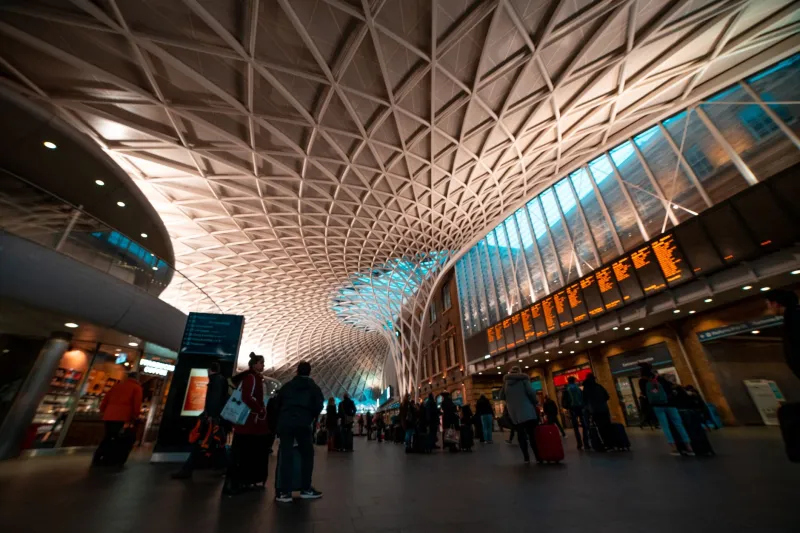
When an event's departure plan depends on the last train, a cancelled service is not a transport inconvenience. It is a crowd-management event in its own right. The same applies to a delayed bus replacement, a closed station, a taxi rank that empties faster than it fills, or a sudden surge in ride-hailing prices that leaves people stranded at the kerb. In each case, the crowd does not simply wait. It redistributes, questions, queues, and sometimes presses towards whatever looks like a way home.
For UK event marshals, the operational question is not whether public transport can fail. It is whether the ground team has a plan that still works when it does. The timetable is not the plan. The plan is the set of decisions, holding areas, messages and handovers that keep dispersal orderly when the published service no longer matches the crowd in front of you.
Build the contingency before the timetable is tested
Transport contingency starts weeks before doors open. Event operations should identify every operator on which egress depends: rail operators, local bus companies, tram or light rail providers where relevant, licensed taxi ranks, and the local authority teams responsible for highway and transport coordination. The aim is not to secure a guarantee that nothing will fail. It is to know who decides what, who can be reached at short notice, and what alternatives exist when a service drops out.
A practical pre-event liaison should confirm the last viable service times, the expected passenger load, station access arrangements and any planned engineering work. It should also record the operator's incident contact, the local authority's transport control point and the police or British Transport Police contact for station-side issues. Where an event depends on park-and-ride or contracted coaches, the plan should state what happens if a vehicle is delayed, how many replacement vehicles can be called, and who authorises that call.
Marshals should not be asked to improvise this framework on the night. Their role is to execute it on the ground: to recognise the moment when normal egress becomes contingency egress, to move people to safer holding positions, and to keep information flowing to event control. That requires a briefing that includes transport failure scenarios, not merely a list of gate times.
Triggers on the ground, not guesswork
Contingency needs decision triggers. Without them, marshals either react too late or escalate too early. Useful triggers are specific and observable: a cancelled service confirmed by the operator; a station closed or entry restricted; a queue for buses or taxis exceeding a stated threshold; a wait time that moves beyond the event's agreed tolerance; or a crowd density at a transport point that begins to affect movement or welfare.
The trigger should be tied to an action. A confirmed rail cancellation, for example, may require marshals to stop directing passengers towards the station and begin directing them to a holding area while event control confirms alternatives. A taxi queue beyond capacity may require the rank to be capped, with marshals managing the approach and preventing the queue from spilling into a live highway. A bus delay may require the queue to be split by destination so that information can be given accurately.
This is where reliable ground teams matter. A marshal who understands the trigger can act without waiting for a radio call that may not come quickly enough. A marshal who has not been briefed will either hold the line too long or create a second problem by moving people without direction. The difference is preparation, not improvisation.
Holding areas that hold
A holding area is not a pen. It is a managed space with a purpose, a capacity and a welfare standard. When transport fails, the first priority is to move people away from platforms, kerbs, junction mouths and other places where waiting becomes hazardous. The second is to make the wait tolerable and legible.
Good holding areas have lighting, accessible routes, toilets or clear information about the nearest facilities, and a visible marshal presence. They should not trap people who have their own onward arrangements. They should be positioned so that they do not block emergency access or prevent buses and taxis from reaching the pick-up point. Where the weather is poor, under-cover space and water may be as operationally important as the queue barrier itself.
Marshals should be prepared to manage movement into and out of the hold, not just the perimeter. People will leave to seek information, meet friends or attempt a different route. A holding area that cannot accommodate that movement becomes a pressure point. Clear entry and exit routes, plus a marshal positioned to answer questions, will do more for order than a line of barriers alone.
Plain messaging, repeated consistently
Transport failure generates uncertainty, and uncertainty generates movement. The marshal's message should be short, factual and repeated. It should say what has happened, what passengers should do now, and where they should go. It should not speculate about when a service will resume unless the operator has confirmed it.
Event control should provide a script or agreed wording for the main scenarios. Marshals should use it consistently across the site. If one gate is telling people to wait and another is telling them to walk to a different station, the crowd will test both instructions and trust neither. Where possible, the same message should appear on event screens, social channels and PA announcements, but the marshal on the ground remains the human point of clarification.
Staff should also be clear about what they cannot promise. A marshal can direct someone to a holding area, a bus stop or a taxi rank. A marshal should not guarantee a seat, a fare or a connection. That distinction protects the public from false reassurance and protects the marshal from being drawn into a transport decision that belongs to the operator.
Handover to transport and police teams
There comes a point when the event's transport contingency becomes a multi-agency problem. If crowds are affecting a station, a highway or a town centre, the handover to transport operators and police must be explicit. Who is managing the event side of the crowd? Who is managing the station side? Who authorises a queue to be held on the public highway? Who communicates with passengers once they leave the event footprint?
A short handover briefing should confirm the current position, the numbers involved, the holding arrangements, the routes in use and the next review point. Marshals should know the boundary of their authority. They are not security and they are not transport controllers. They are the human buffer that keeps people informed and moving safely while the organisations with transport responsibility make their decisions.
After the last train
The debrief should begin before the crowd has fully cleared. Record what triggered the contingency, how long it lasted, where people were held, what messages were used and where pressure built. Those notes are the raw material for a better plan next time. Transport failure is rarely a one-off. The event that plans for it calmly is the event that disperses safely when the timetable stops working.
Marshals Group provides reliable ground teams for UK events that need disciplined dispersal, clear communication and a calm human presence when transport plans are under strain.