Carried, Not Handed Out: A Wet-Weather Standard for UK Marshal Packs

Photo: Chatham House, CC BY 2.0, via Wikimedia Commons
The Pack Is Part of the Operation
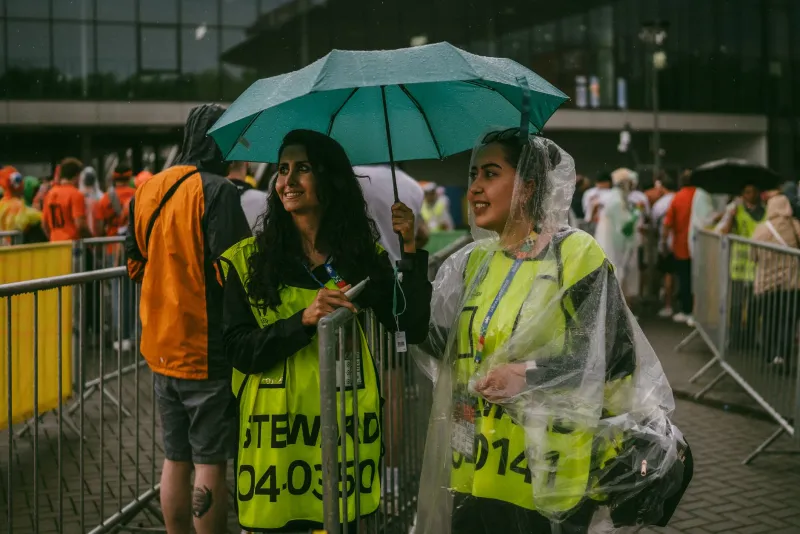
Wet weather is not an exception in the UK event calendar. It is a planning assumption. Yet marshal packs are still too often assembled as if they were handouts: a folded map, a printed briefing, a lanyard and a hope that the rain holds off. On the ground, that assumption fails quickly. Paper softens, screens mist over, gloves make small print unreadable and the ground turns decisions into guesswork.
A marshal pack should be treated as a controlled operational item. It is carried, consulted, amended and returned. It exists to answer three questions under pressure: where am I, what am I meant to do, and who do I contact when the plan changes. Designing for wet UK event days means accepting that the pack will be dropped, folded into a pocket, held in a gloved hand and exposed to sustained drizzle. The standard should be usability in those conditions, not appearance in a briefing room.
Design From the Shift, Not the Stationery
The starting point is not a list of nice-to-have print items. It is the marshal shift itself. Ingress, queue management, crossing points, vehicle access, welfare checks and egress all place different demands on the materials a marshal carries. A pack that tries to cover every contingency becomes too bulky to use. A pack that covers only the site overview leaves marshals exposed when a route changes.
The practical approach is to define a core pack and a role add-on. The core pack should contain the site map, the current briefing card, the contact card, an incident record card and the weather trigger card. Role add-ons might include a specific zone map, a transport dispersal sheet or an accessible route note. Each item must earn its place by being consulted during the shift, not merely distributed at the start.
Digital copies have a role, but they are not a substitute for a printed core. Screens fog, batteries drain and gloves reduce touch sensitivity. A phone is useful for confirming a version or checking a message. It is less useful when a marshal is standing in a muddy gateway trying to identify a grid reference in horizontal rain.
The Map Must Work at Arm's Length
Site maps are the most frequently used item in the pack and the most frequently over-designed. A map that looks clear on a desk can become unreadable when printed at A5, folded badly and held at arm's length in poor light. The map should use large type, strong contrast and a simple hierarchy. Fixed landmarks matter more than decorative detail. North arrows, scale bars and grid references should be present, but they should not crowd the route information that marshals need first.
For UK sites, Ordnance Survey-style grid references remain a useful common language, particularly where the event footprint sits within a wider rural or park landscape. They allow a marshal to describe a location precisely without relying on temporary signage that may have blown over. The map should also show temporary structures, access gates and welfare points, but these should be visually distinct from permanent features.
Print material should be selected for wet handling. Polypropylene sheets, synthetic paper and sealed map cases are more reliable than standard paper in a laminating pouch that has not been properly sealed. Lamination can crack or admit water at the edges. A map case with a neck cord or a quick-release lanyard keeps the map accessible without requiring the marshal to remove gloves. If a site uses colour-coded zones, the map should carry the same coding as the briefing card and the physical signage. Consistency reduces hesitation.
Version Control Is a Field Discipline
Wet weather increases the chance that old documents survive in pockets and pouches long after they have been superseded. A pack without version control becomes a source of conflicting instructions. Every printed item should carry a clear issue identifier, a date and time of issue, and a simple statement of what it replaces. Colour-coded edges or a single bold version block on the front page can help marshals confirm at a glance that they are carrying the current set.
The control process should extend beyond printing. Packs should be issued at briefing and returned at debrief, with a simple sign-out record. Superseded copies should be withdrawn rather than left in circulation. Where digital versions are distributed, the file name and the printed version should match exactly. A marshal should not have to decide which of two maps is more recent while standing at a junction in the rain.
Briefing Notes Should Be Short Enough to Use
The briefing card is not the full briefing. It is the residue that a marshal needs after the briefing has ended. It should be short enough to read in seconds and specific enough to resolve common uncertainties. Radio channel, emergency code, key access routes, welfare point, weather trigger and supervisory contact are typical contents. A wet-weather addition might include slip hazards, mud routes, shelter locations and the threshold for escalating a weather concern.
Plain English and bullet points are more useful than dense paragraphs. Icons can help where they are already familiar to the team, but they should not replace words that carry operational meaning. The card should be printed on the same durable stock as the map and stored in the same case. If it is updated during the event, the update should be issued as a replacement card with a clear version marker, not as a verbal amendment that relies on memory.
The Small Standard That Holds
A workable wet-weather standard is modest: a durable site map, a current briefing card, a contact card, an incident record card, a weather trigger card, a pencil or permanent marker, and a sealed case to hold them. The pack should be tested before the event, not assumed to be waterproof. A simple checksheet at issue and return will reveal torn cases, missing cards and outdated versions before they become operational problems.
Marshals Group teams work across UK sites where weather is part of the operating environment. The pack that survives a wet day is not the most elaborate one. It is the one that has been designed around the shift, controlled through versioning and issued as a tool rather than a handout. When the ground turns to mud, that distinction matters.